Can You Still Grow Taller After 19? A Late Bloomer’s Guide
How can I still grow taller at or after 19 ? Is a commonly asked question by both boys and girls who feel they haven’t reached their desired height.
But here’s what you need to know.. the answer to this question is; It depends on your body and or genes not necessarily age.

Here’s why..
First, after 19 years, it’s expected that for most girls you’ve passed the puberty stage while the story is quite different for some boys.
Some boys continue growing even in their 20’s.
Before we start mixing up terms, let’s first understand puberty.
Puberty is the stage of sexual maturation as well as rapid body, brain growth and development.
It’s the period when the child’s body experiences the greatest growth spurt ( of up to 30 cm, for boys, and 27 cm for girls) and transforms into an adult body.
When does puberty begin and end?
Puberty stage begins as early as 8 years for some girls and ends by 14 to 15 years for most girls while for boys, it begins around 9 years and ends by age 16.
Girls normally stop growing by the time puberty ends at 15, while Boys continue growing slowly after the end of puberty until the age of 18 though like earlier mentioned, some continue growing up to early to mid 20’s.
Puberty affects each individual differently
However, the time when puberty begins and ends isn’t etched in stone.
It varies from individual to individual depending mainly on factors like nutrition and economic development though genes also play a part.[ 1 ]
Puberty begins earlier for Children who are well nourished right from the time of birth and those living in high income countries.
Hence, after 18 years, the body is done growing but this isn’t necessarily the case for everyone and here’s why.
A. The Late Bloomer Factor also known as Constitutional Growth Delay
You may notice certain professional athletes particularly in basketball who seem to grow out of nowhere after age 19 or 20.
This is rarely a medical disorder and more often a case of constitutional growth delay.
What’s is constitutional growth delay?
Constitutional Growth Delay often referred to as being a “late bloomer” is a temporary delay in skeletal development.
It is not a disease or a permanent growth deficiency; rather, it is a variation of normal development where a person’s internal clock runs slower than their peers. [2 ]
Constitutional growth delay is highly hereditary.
If one or both of your parents were late bloomers for example, if your father grew 3 inches in college or your mother didn’t reach her full height until 19 there is a high probability you carry the same genetic timer.
If you have been diagnosed with or suspect constitutional delay, you are in a unique position because your growth plates could still be open at 19 or even after.
Your body is still responsive to external factors like exercise.
B. The Phenomenon of Delayed Bone Age
One of the reasons why some people can grow taller after 19 can be attributed to a discrepancy between their chronological age and bone age.
Take an example a documented report of two men who were diagnosed with hypopituitarism—a condition where the pituitary gland fails to produce sufficient growth hormone (GH).
At ages 22.7 and 24.3, these men had a bone age of only 13 to 14 years.
Effectively, their skeletons were still in early puberty despite their chronological adulthood.
After starting GH treatment, they grew an additional 8 and 9 inches respectively by the time they reached age 29.
[ 3 ]
Their bodies simply waited for the hormonal signal to complete a growth spurt that was “paused” for over a decade.
But how can you tell if your bone age is delayed?
The best way to tell if your bone age is delayed is by taking a visit to the hospital for an
xray scan.
But before taking that visit, there are some telltale signs that your bone age may be delayed. These include:
Visible signs of delayed bone age
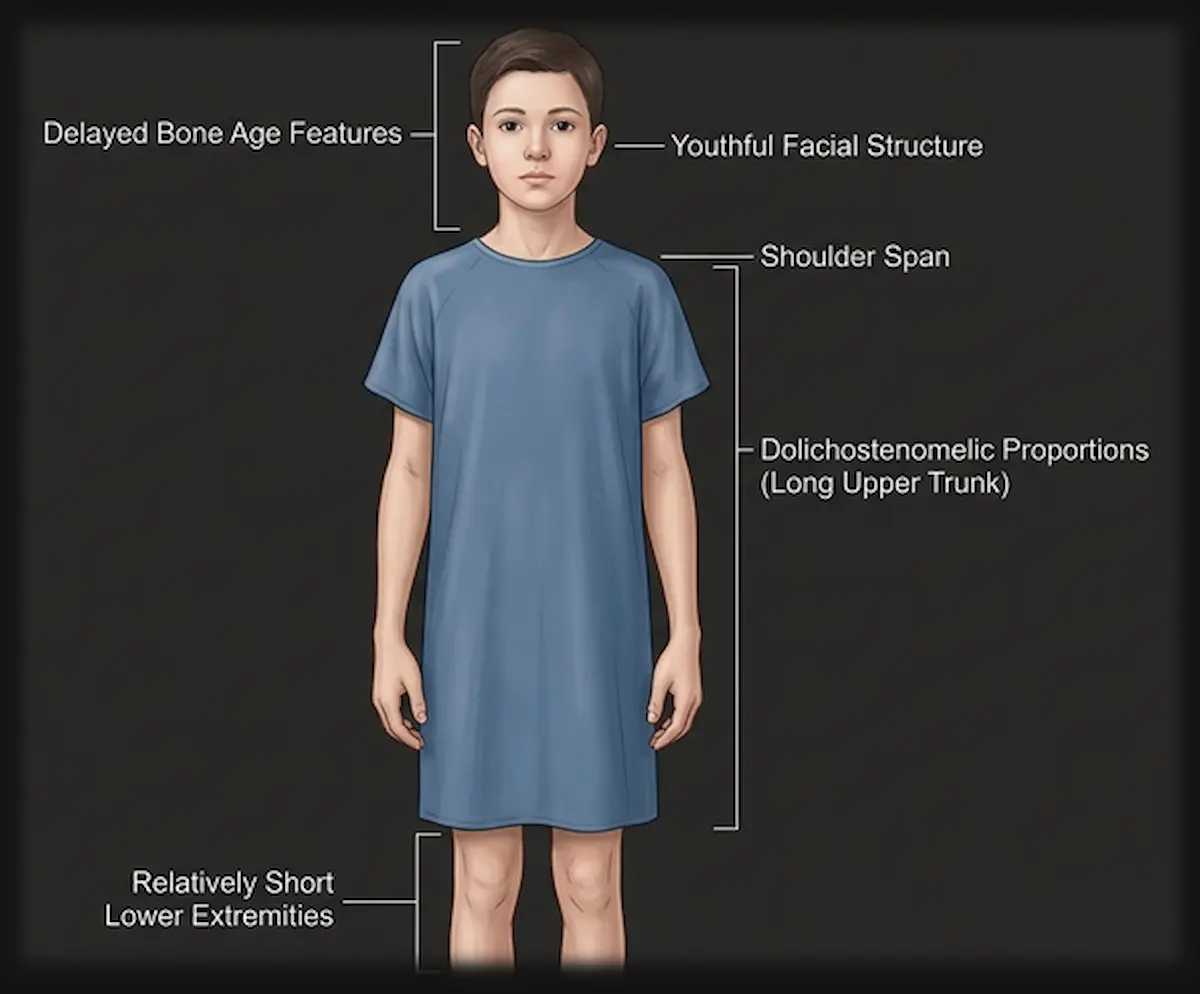
- You have been consistently short throughout childhood.
2. Your arms appear relatively long compared to your body.
3. Your legs are shorter compared to your torso.
4. Your body has a narrow, linear shape
5. Your facial features look younger than your actual age.
These signs aren’t guarantees, but they are worth paying attention to.
What is the reliable way to know your bone age?
The only reliable way to know your bone age is through a hand and wrist X-ray.
This simple scan allows a radiologist to measure your bone age. To read more on how bone age is measured, visit What is bone age article
If your bone age is delayed, your body still has the physical capacity to grow regardless of what your birth certificate says.
If you suspect your bone age is delayed, Below are the steps to take to increase your height after 18, 19 or 20.
1. Aim to optimize the secretion of Growth Hormone (GH)
G.h plays a number of roles when it comes to body growth which can’t be exhausted here including but not limited to ;
- Stimulating the growth plate cells to multiply and later become bone thereby contributing to bone growth in length.
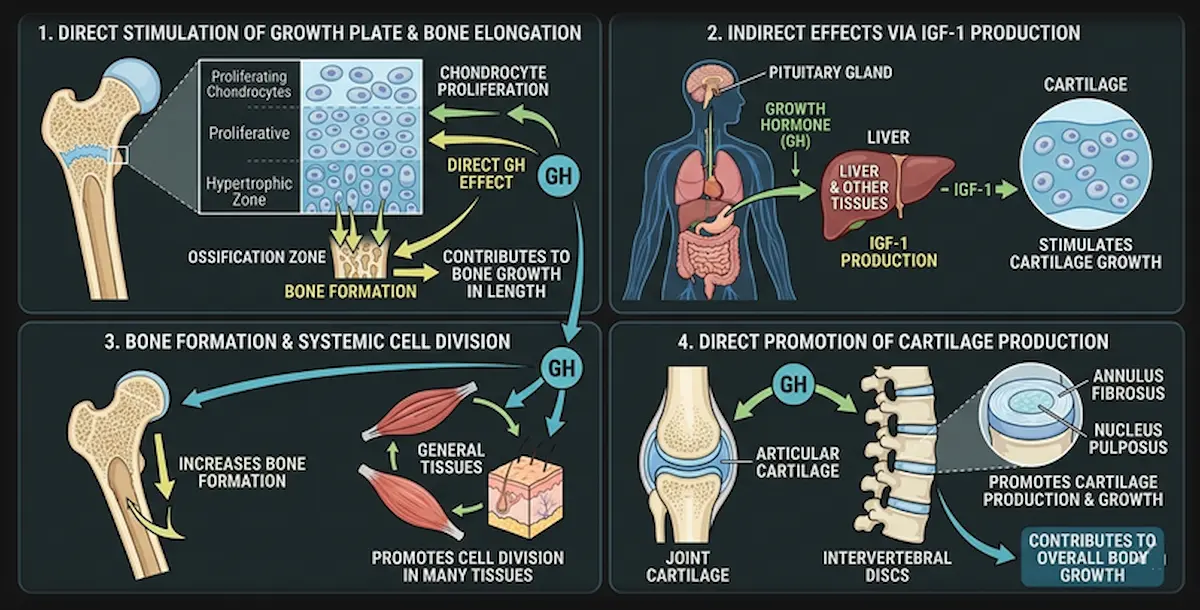
- signaling the liver and other tissues to produce IGF-1, which then Stimulates cartilage growth.
- Increases bone formation and Promotes cell division in many tissues.
- Finally, G.h directly promotes Cartilage production and Growth which is important in many parts of the body such as the joints and the intervertebral discs in the spine there by greatly contributing to overall body growth.
The different ways to naturally increase G.h release can be found on how to Increase human growth hormone during and after puberty page.
2. Exercise Regularly.
Physical activity stimulates bone growth in a number of ways.
First, exercising triggers the release of a number of growth related hormones including testosterone, estrogen, Insulin‑like Growth Factor 1, and of course Growth Hormone.
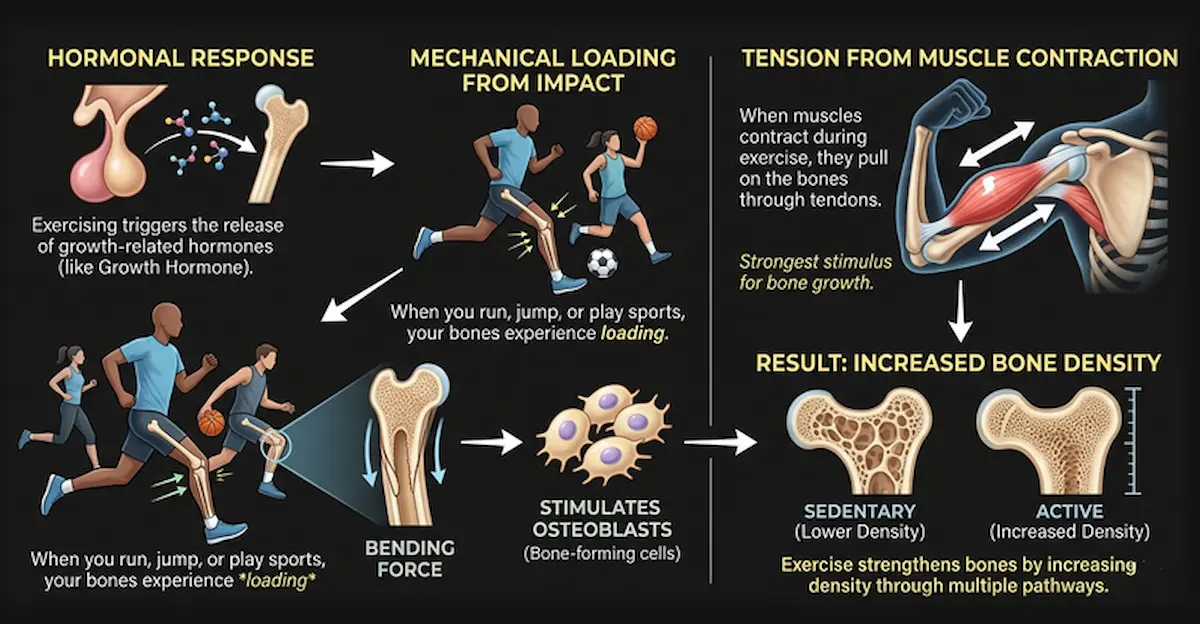
These hormones Stimulate the growth plates, increase protein synthesis in bone and muscle, and Accelerate skeletal development.
Second, When you run, jump, or play sports, your bones experience loading.
This force slightly bends the bone and stimulates bone-forming cells called osteoblasts to repair and add bone tissue to regions that require reinforcement to with stand the force from ground impact.
In the process, bone density is increased and thereby improving structural alignment.
Finally, When muscles contract during exercise, they pull on the bones through tendons.
This pulling force is actually one of the strongest stimuli for bone growth.
Sports that create strong muscle contractions (like sprinting or climbing) stimulate bones even more.
3. Focus on The Building Blocks of Bone Elongation.
You can’ t build a house without bricks.
If your bone age is 14 but your chronological age is 19, your body needs a puberty-level nutrient intake to fuel the delayed growth spurt.
Your body needs;

1. Calcium, the primary structural component of the bone matrix (Hydroxyapatite).
2. Vitamin D3 to absorb Calcium from the gut;
3. Vitamin K2 for channeling Calcium into the bones.
4. Magnesium Required to convert Vitamin D into its active form and also maintains bone physical integrity.
5. Zinc to Stimulate osteoblast (bone-building cells) activity and protein synthesis.
6. And finally Phosphorus Works directly with Calcium to create the hard structure of the skeleton.
For more about these foods and the sources, visit Foods to eat to grow taller during or after puberty
4. Establish a Dedicated Growth-Optimized Exercise Routine.
If you aren’t a professional athlete, or you don’t engage in any sports activity, you must create your own physical activity schedule.
To capitalize on your remaining growth potential, daily or regular exercise program must integrate three critical pillars to be effective . These include:
GH-Stimulating Exercises:
High-intensity movements (like sprinting) that trigger the pituitary gland to release a surge of natural growth hormone.
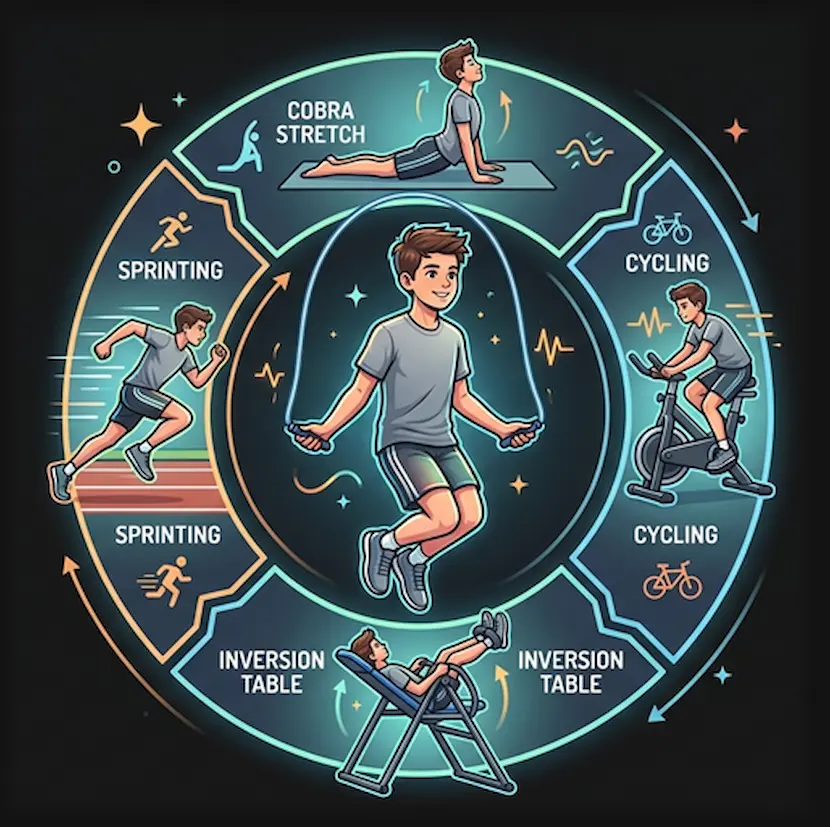
Bone Density & Mineralization:
Impact-based exercises (like plyometrics) that signal the body to strengthen and lengthen the skeletal matrix.
Decompression & Distraction:
Specific stretching and hanging techniques designed to relieve pressure on the intervertebral discs and “distract” the growth plates, allowing for maximum expansion.
Consistency is the differentiator. Your body needs a repetitive, high-frequency signal to understand that it is not finished growing yet.
If you need guidance on creating an optimized routine while effectively incorporating all these exercises on a regular basis, read the grow taller after puberty exercise routine handbook.
Final thoughts:
While the calendar may say that you are an adult and you are done growing, your biology might still be holding onto a final window of opportunity and this is exactly what happened in my case at 26 years.
Don’t leave your stature to chance during this critical bonus period—take control of your development and start your journey today.

AUTHOR BIO

Dennis Raney (B.Sc.) is an author and a blogger specializing in natural body growth optimization strategies.
After years of navigating the psychological and physical challenges of being under-average height, Dennis dedicated over a decade to researching the intersection of lifestyle, nutrition, and body growth.
By applying an evidence-based approach to healthy lifestyle changes, he successfully navigated his own body transformation, an experience that led him to author his comprehensive guide on height increase during and after puberty.
Today, he shares practical, research-backed strategies through his book and blog to help others overcome similar challenges.”
.
Interested in connecting? :
✉️ Send an email: Dennis »»
💬 Add me on Discord: raney0029 »»